




Introduction
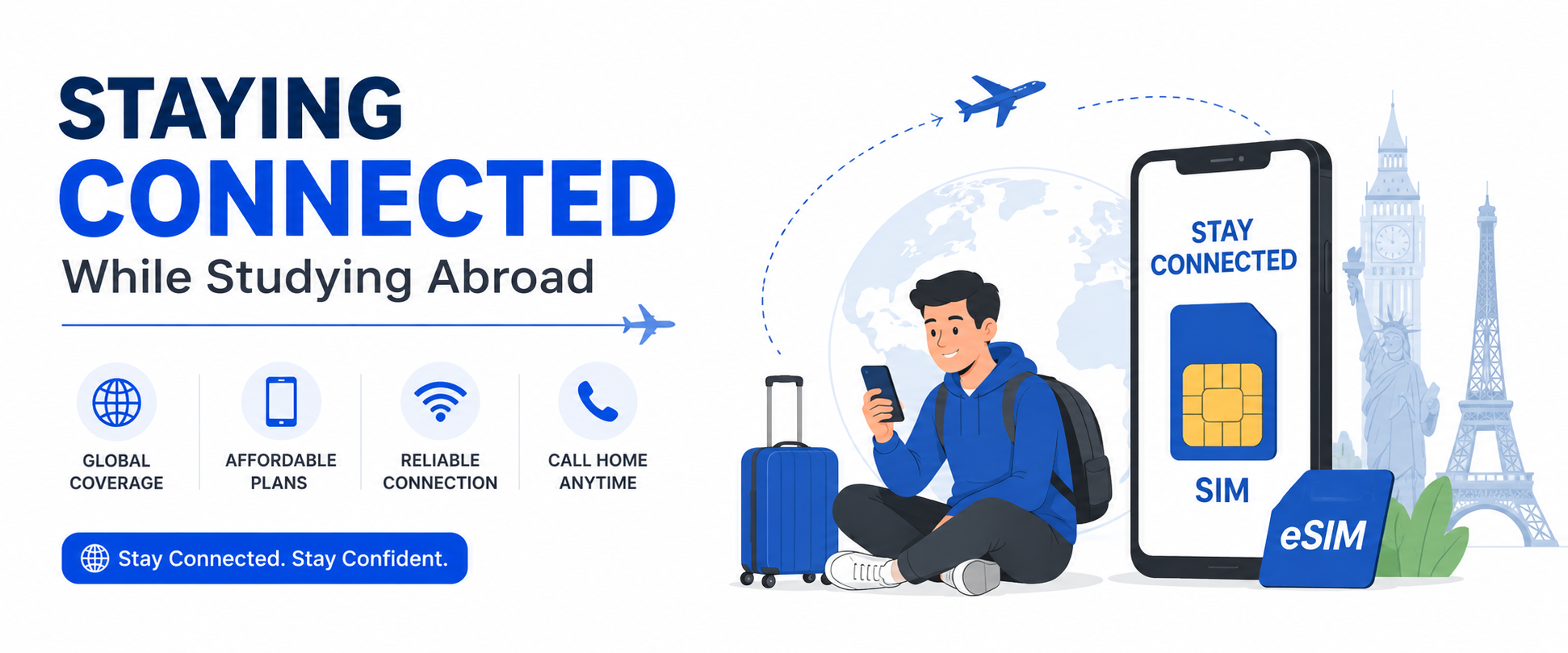
Moving abroad for higher education is an exciting milestone, but staying connected with family, friends, and your university is equally important. Reliable mobile connectivity allows students to communicate with loved ones, access online learning platforms, navigate unfamiliar locations, use banking services, book transportation, and stay updated with important academic information.
Choosing the right mobile solution before or after arriving in your destination country can save you from expensive roaming charges, unreliable connections, and unexpected phone bills. Whether you choose a local SIM card, an international SIM card, or a digital eSIM, understanding the available options will help you make an informed decision.
This guide explains everything international students need to know about staying connected while studying abroad.
Why Mobile Connectivity Matters for International Students
A mobile connection is more than just making phone calls. Students rely on their smartphones every day for academic and personal activities.
Some of the most common uses include:
- Communicating with family and friends
- Accessing university portals and online classes
- Using maps and navigation apps
- Booking taxis and public transportation
- Managing banking and digital payments
- Receiving important university notifications
- Contacting emergency services when required
Having a dependable mobile network ensures that students can settle into their new environment with confidence.
Mobile Connectivity Options for Students
Students studying abroad generally have three major options for mobile connectivity.
Local SIM Card
A local SIM card is purchased after arriving in the destination country.
It usually offers:
- Affordable local call rates
- Lower mobile data costs
- Local promotional offers
- Better long-term value for students staying several months or years
However, some countries have regulations that require passport verification or may restrict SIM card purchases for international visitors.
International SIM Card
An international SIM card allows students to remain connected immediately after landing in another country.
Benefits include:
- Ready-to-use service before departure
- International calling options
- Multiple country coverage
- Convenient activation
- No need to search for local mobile providers immediately
Although international SIM cards provide convenience, they may cost more than local SIM cards for long-term use.
eSIM
An eSIM is a digital SIM embedded inside compatible smartphones.
Unlike physical SIM cards, eSIMs do not require inserting or replacing a SIM chip. Instead, they are activated digitally using a QR code or activation profile.
Many modern smartphones now support eSIM technology, making it an increasingly popular choice among international students.
Physical SIM vs eSIM
Understanding the differences between these two options helps students choose the best solution.
Physical SIM Card
A physical SIM card is a removable chip inserted into the phone.
Features include:
- Physical installation required
- One profile stored on each SIM
- Easy replacement when changing providers
- Compatible with most mobile devices
eSIM
An eSIM is embedded within the smartphone and activated digitally.
Features include:
- QR code activation
- No physical SIM swapping
- Multiple network profiles can be stored
- Faster network switching
- Greater durability since there is no removable chip
Students who frequently travel between countries often find eSIMs more convenient because they can change operators without replacing SIM cards.
Benefits of Using eSIMs and International SIM Cards
International students can enjoy several advantages when using eSIMs or international SIM cards.
Global Connectivity
Many international plans provide coverage across numerous countries, allowing students to remain connected while travelling during holidays or academic exchange programs.
Instant Activation
Digital activation allows students to connect quickly without visiting a local mobile store.
Flexible Plans
Many providers offer:
- Monthly plans
- Short-term packages
- Data-only plans
- Voice and data combinations
Students can choose plans based on their usage and budget.
Cost Savings
Compared with international roaming from a home network, dedicated travel SIMs and eSIMs often offer significantly lower costs.
Easy Network Switching
Students using eSIMs can switch between mobile networks digitally without replacing physical SIM cards.
Choosing the Right Mobile Plan
Before selecting a SIM card or eSIM, students should evaluate several factors.
Consider:
- Destination country
- Length of stay
- Data requirements
- International calling needs
- Budget
- Device compatibility
- Network coverage
- Customer support
Students staying abroad for only a few weeks may benefit from international travel plans, while long-term students often save more by switching to a local SIM after settling in.
International Coverage
Many international mobile plans offer connectivity across more than 150–200 countries.
Depending on the provider and package, students may receive:
- Voice calling
- SMS services
- High-speed mobile data
- International calling options
- Roaming across multiple countries
Students travelling between different countries should verify roaming benefits before selecting a plan.
Pre-Departure Setup
Preparing your mobile connection before leaving your home country can make your arrival much smoother.
Benefits include:
- Immediate connectivity after landing
- Easy communication with airport pickups
- Access to navigation apps
- Online hotel check-ins
- Contact with university representatives
Having an active mobile connection reduces stress during international travel.
Top-Up and Recharge Options
Many international mobile plans allow students to recharge whenever additional data is required.
Recharge options often include:
- Extra mobile data
- Extended validity
- Additional calling minutes
- Flexible monthly renewals
Students should compare recharge costs before purchasing a plan.
Common Challenges Students May Face
Although staying connected is easier than ever, students may encounter certain challenges.
These include:
- High roaming charges
- Limited network coverage in rural areas
- Device compatibility issues
- SIM registration requirements
- Data limits
- Expensive international calling
Researching mobile plans before departure helps avoid these problems.
Tips for Choosing the Best Student SIM
To find the most suitable option, students should:
- Compare multiple mobile plans.
- Check if the destination country allows foreign SIM purchases.
- Verify whether the phone supports eSIM technology.
- Choose plans with sufficient data allowances.
- Look for affordable international calling options.
- Review recharge and renewal policies.
- Ensure reliable customer support is available.
- Read user reviews before purchasing.
Best Strategy for Long-Term Students
For students studying abroad for one year or longer, a practical approach is to use a short-term international SIM or eSIM immediately after arrival and then switch to a local SIM card once they are familiar with their new surroundings. This combination provides convenience during the initial days while helping reduce long-term communication expenses.
Future of Student Mobile Connectivity
Technology continues to transform international communication.
Some emerging trends include:
- Fully digital eSIM activation
- Faster 5G connectivity
- Global data packages
- AI-powered customer support
- Flexible international roaming
- Multi-country mobile plans
- Enhanced mobile security features
As smartphones become more advanced, eSIM technology is expected to become the preferred choice for international students.
Conclusion
Reliable mobile connectivity is an essential part of studying abroad. Whether you choose a local SIM card, an international SIM card, or a digital eSIM, selecting the right option can make your international education journey smoother, safer, and more affordable. Understanding the differences between these options, comparing available plans, checking device compatibility, and planning your connectivity before departure will help you avoid unnecessary costs and stay connected wherever your studies take you. By choosing a mobile solution that matches your destination, budget, and communication needs, you can focus on your education while staying in touch with the people and services that matter most.